Pages

"Pongáio" was the name my Aunt Mona gave to a long, green, cool room where we gathered at her home —
replete with comfy chairs, a rocker, sewing machine, sewing goods, beautiful beads, shelves, books, bibelots, photographs, odds'n'ends, mementos of a life, treasures —
a gathering of all the useful & 'useless' things that so make life a pleasure.


Showing posts with label sacred feminine. Show all posts

Sunday, September 03, 2017

Ave Maria ~ Ashana


Ave Maria  ~ Ashana

 Ave Maria
 
Áve María, grátia pléna,
Dóminus técum.
Benedícta tū in muliéribus,
et benedíctus frúctus véntris túi, Iésus.
Sáncta María, Máter Déi,
óra pro nóbis peccatóribus,
nunc et in hóra mórtis nóstrae. Ámen.
 
Source


http://www.soundofashana.com/lyrics/gloriosa.html
Gloriosa
Hildegard von Bingen was an 11th century mystic born into a noble family near Bingen, in Germany's Rhineland. As a child she saw and spoke with angelic messengers regularly. As an adult she founded and led two Benedictine monasteries for women, traveled and spoke publicly to great crowds, and was a renowned healer. Her advice was sought by the church hierarchy and kings alike, while her writings received the papal blessings. She was also a prolific playright and musician. Hildegard spoke of her music as being a translation of the "Cosmic Symphony" which she heard during her visions. Gloriosa is an adaptation of lyrics from Hildegard’s “Ave Generosa,” set to new music.

Ave Maria generosa
Sancta Maria gloriosa

O pulcherrima, et dulcissima, quam valde Deus in te delectabatur.
Venter enim tuus gaudium habuit cum omnis celestis sonuit.
Tu candidum lilium quod deus ante omnem creaturam inspexit

Hail noble Mary!
Holy glorious Mary!
O lovely and tender one, how greatly has God delighted in you.
Your womb held joy with all the celestial symphony sounding through you.
You appeared as a shining white lily, as God looked upon you before all of Creation.

“Ave Generosa” translation and excerpted notes by Norma Gentile, used with permission. Please see Norma’s exquisite translations of Hildegaard’s words at http://www.healingchants.com

Monday, November 08, 2010

Venus Rising

"Now it is time for Venus to emerge from the light of the Sun, any day now, as the heliacal rising planet. Keep your eye on the pre-dawn sky, as many star priests and priestesses have done through millennia. This is just about the strongest position any planet or star can take, announcing the day."
— M. Kelley Hunter

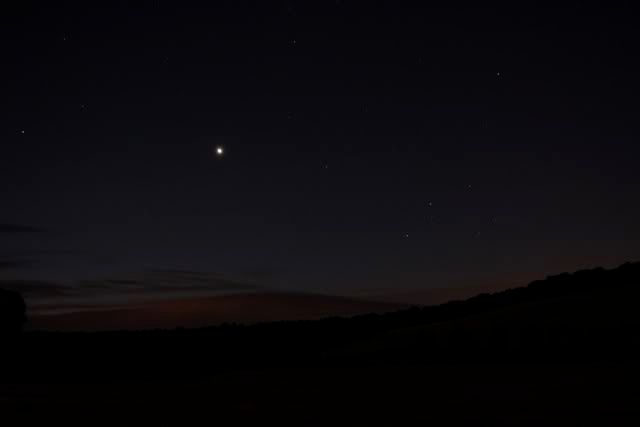
Venus [rising], Orion and Sirius by Tristan Gooley @ The Natural Navigator

            "The Lady of the Morning is radiant on the horizon.

             Honored Counselor, Ornament of Heaven…
             When sweet sleep has ended in the bedchamber,
             You appear like bright daylight.

             You render a cruel judgment against the evildoer;
             You destroy the wicked.
             You look with kindly eyes on the straightforward;
             You give that one your blessing."

— from a hymn to Inanna, as given in Inanna, Queen of Heaven and Earth 
   by Wolkstein and Kramer, via Cosmic News by  M. Kelley Hunter

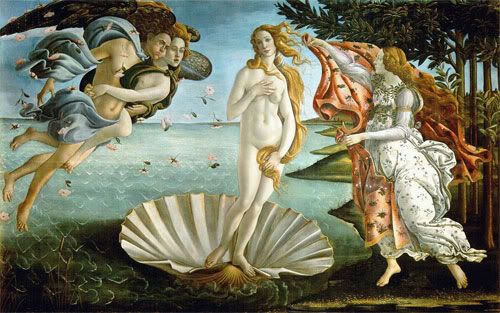
The Birth of Venus by Sandro Botticelli
(look at all those wonderful, beautiful pudges!
forget the Twiggies, Bunchens, et al... Botticelli is the word!)

APOD - Astronomy Picture of the Day
Venus and the Moon at dawn, Nov 5, 2010

Thursday, May 20, 2010

From the Cold

An excerpt from todays Planet Waves blog, by Len Wallick, Shake Up Day
In her treatise on the Taurus New Moon last week, the Finnish astrologer Kirsti Melto made the Sedna conjunction her focus. Of all the things we know of that orbit the Sun, Sedna is the furthest out with the longest orbital period. It makes Eris seem like the girl next door, it’s so far away.

As distant the astronomical object is in space, so is the ancient myth is in time. The Inuit people have dwelt in the arctic regions for thousands upon thousands of years. Adapting both culturally and physically, they knew the wisdom of existing as part of their environment rather than seeking dominion over it. The unlikely but abundant source of their survival was the cold and icy sea. Sedna was the daughter tragically sacrificed to that sea for the sake of her father’s survival. There she became goddess supreme. From there she demanded to be acknowledged and heard. The Inuit people know this and honored her for the sake of their own survival.

Just as Sedna called the Inuit from the cold, dark depths of the Arctic Sea, so she now calls us from the cold distance of the Oort cloud, the borderline between our solar system and the rest of our galaxy. In an averse semi-sextile to Eris and a square to Mars are expressed the anger and alienation that our own planet must certainly feeling towards its most precocious children – us.

Is it really necessary for us to assume the role of being the infection of this world? Is is really possible for this planet to respond to us as if we were? Sedna knows. The mythical fate of the child sacrificed so that the parent might survive is part of that ancient knowledge. But so is the abundance that, paradoxically, the cold and dangerous realm of Sedna can yield. We are in no position to argue. It’s time to listen. Either that or face the biggest shake up of them all, a new order of which we will not be a part.

Sunday, March 29, 2009

Durga e Inanna

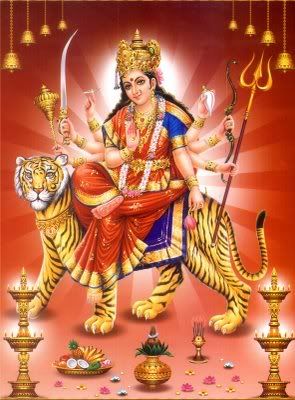
Neste blog vi um vídeo sobre Amma, Amma as Durga, e as imagens da Deusa Hindu Durga me fizeram lembrar de Inanna, a quem no meu espiral de estudos, voltei a ver esta semana.

Uma Deusa multifunção (muitos braços) e que cavalga, ou está em cima, de tigres... ecos através dos tempos.
É a manifestação/aspecto guerreira da Devi, Deusa suprema. A cor azul das suas vestes ricas... colar de lápis-lazuli de Inanna. Raios. Mãos elevadas com instrumentos de poder.
Hmmmmm.... hmmmminante, ruminações...
Durgha é descrita como um aspecto guerreiro da Devi Parvati com 10 braços, que cavalga um
leão ou um tigre, carrega armas e assume
mudras, ou gestos simbólicos com a mão.
Esta forma da Deusa é a encarnação do feminino e da energia criativa (
Shakti).
— Wikipedia,
Durga
Outra manifestação de Shakti, Durga é a própria Parvati. Aqui, porém, ela assume a postura de uma guerreira, capaz de eliminar os demônios que prejudicam os deuses/deusas e os homens. Tem uma beleza forte e cativante e, por demonstrar coragem e astúcia, revela outro aspecto da feminilidade, menos conhecido e mais guerreiro. A palavra Durga significa “inacessível”, no sentido de algo ilusório, imaterial.
A deusa também surge sob outras manifestações, com os nomes de:
* Jagaddharti (Mãe do Mundo),
* Dasabhuja (Deusa de dez mãos),
* Muktakesi (A que tem cabelos ao vento),
* Tara (A salvadora),
* Chinnamustaka (A decapitada),
* Krishnakrora (A que amamentou krishna),
* Jagadgauri (Mulher dourada de fama universal),
* Annapuma (A que traz fortuna),
* Pratyangira (A bem proporcionada),
* Singhavahini (A que monta um leão),
* Mahishamardini (A que matou o demônio Mahisha) e
* Kali (A negra), esta a mais conhecida de suas manifestações.

O mantra de Durga, ou Durga Hridaya Mantra, proporciona proteção feminina, consciência, sexualidade e segurança. Deve ser entoado oito vezes ao dia: Om Em Hrim Klim Camunda Vicai Namah.
Dentro da tradição tântrica e hindu há dez divindades relacionadas com Durga que conferem atributos variados. Seus dez mantras de sabedoria (Dasha-Mahavidyas) são:
• Bhuvaneshuari (sustentação da vida) é a deusa criadora: Om Bhuvaneshuari Namah.
• Matangi (poder de dominar) é a deusa energizadora: Om Matangi Namah.
• Kali (poder sobre o tempo) é a deusa controladora: Om Kali Namah.
• Bagala (destruição do negativo) é a deusa protetora: Om Bagala Namah.
• Chinnamasta (distribuição da energia da vida) é a deusa iniciadora: Om Chinnamasta Namah.
• Dhumavati (domínio da natureza) é a deusa desafiadora: Om Dhumavati Namah.
• Tara (recriação da vida) é a deusa libertadora: Om Tara Namah.
• Bhairavi (modificações na vida) é a deusa tecelã: Om Bhairavi Namah.
• Sodashi (aperfeiçoamento) é a deusa preservadora: Om Sodashi Namah.
• Kamala (restauração) é a deusa dos poderes: Om Kamala Namah.
Entoe esses mantras 108 vezes ou em múltiplos de 8

Nota:  Oito é o numero de Inanna.

Saturday, April 12, 2008

The Castaway — Eris

In mythology, she [Eris] represents the castaway aspect of the feminine: the one who is not invited to "the party" (that is, life), and who wreaks havoc on the world as a result. That havoc, in the case of Eris, happened to be the Trojan Wars, which lasted 10 years some time around the 10th or 12th century B.C.E. Many of the great heroes of Greece perished and the city of Troy fell. Note, this was probably not a mythological war.

There is a connection here: the phenomenon of casting off part of oneself and the subsequent creation of havoc and turmoil was covered by Carl Jung in the 20th century. That which we do not accept about ourselves causes chaos, first in ourselves and then in the world.
— Eric Francis
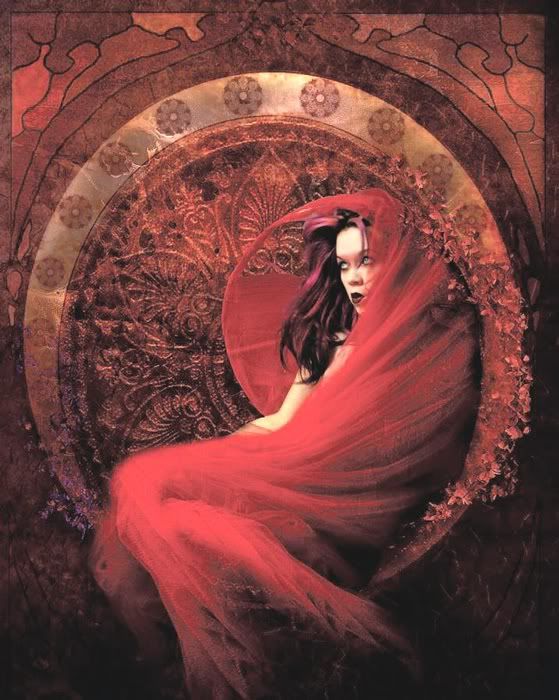
Eric's illustration of Eris: © Alexandra V Bach