Friday, February 25, 2011

Monday, February 14, 2011

Saturday, February 05, 2011
Change
"A BIT OF WISDOM from A Course in Miracles tells us that no matter what our lives look like at any given moment, we can choose again. As our awareness shifts, we create ourselves anew, adjusting our resonant signature and consequently, experiencing life differently.
...
In Jerry Jampolsky's Love Is Letting Go Of Fear, he gives us the words we use to stay in old energy and sabotage our progress, and suggests that we both notice and curtail their constant use:
impossible
can't
try
limitation
if only
but
however
difficult
ought to
should
doubt
any words that place you or anyone else in that category
any words that tend to measure or evaluate you or other people
any words that tend to judge or condemn you or someone else"
— Judith Gayle, Letting Go of Fear, Planet Waves Weekly, Nov. 14, 2008
Friday, January 21, 2011
Improvisation sur les Folies d'Espagne
From the film I saw some time ago, Tous le Marins du Monde.
Improvisation sur les Folies d'Espagne, Marin Marais (1656-1728)
Soundtrack played by Jordi Savall
And here, Jordi Savall
From Wikipedia, Folia:
La Folía (Spanish), also folies d'Espagne (French), Follies of Spain (English) or Follia (Italian), is one of the oldest remembered[citation needed] European musical themes, or primary material, generally melodic, of a composition, on record.
...
History
The epithet 'Folia' has several meanings in music.
Over the course of three centuries, more than 150 composers have used it in their works. The first publications of this theme date from the middle of the 17th century, but it is probably much older. Plays of the renaissance theatre in Portugal, including works by Gil Vicente, mention the folia as a dance performed by shepherds or peasants. The Portuguese origin is recorded in the 1577 treatise De musica libri septem by Francisco de Salinas.
Jean-Baptiste Lully, along with Philidor l'aîné[8] in 1672, Arcangelo Corelli in 1700, Marin Marais in 1701, Alessandro Scarlatti in 1710, Antonio Vivaldi in his Opus 1 No 12 of 1705, Francesco Geminiani in his Concerto Grosso Number 12 (which was, in fact, part of a collection of direct transcriptions of Corelli's violin sonatas), George Frederick Handel in the Sarabande of his Keyboard Suite in D minor HWV 437 of 1727, and Johann Sebastian Bach in his Peasants' Cantata of 1742 are considered to highlight this 'later' folia repeating theme in a brilliant way. Antonio Salieri's 26 variations, produced late in his career, are among his finest works.
In the 19th century, Franz Liszt included a version of the Folia in his Rhapsodie Espagnole, and Ludwig van Beethoven quoted it briefly in the second movement of his Fifth Symphony.[dubious – discuss]
La Folia once again regained composers' interest during the 1930s with Sergei Rachmaninov in his Variations on a theme by Corelli in 1931 and Manuel María Ponce and his Variations on "Spanish Folia" and Fugue for guitar.
The folia melody has also influenced Scandinavian folk music. It is said[who?] that around half of the old Swedish tunes are based on la folia. It is possible to recognize a common structure in many Swedish folk tunes, and it is similar to the folia structure. Old folk tunes (19th century or older) which do not have this structure often come from parts of Sweden with little influences from upper classes or other countries.
Improvisation sur les Folies d'Espagne, Marin Marais (1656-1728)
Soundtrack played by Jordi Savall
And here, Jordi Savall
From Wikipedia, Folia:
La Folía (Spanish), also folies d'Espagne (French), Follies of Spain (English) or Follia (Italian), is one of the oldest remembered[citation needed] European musical themes, or primary material, generally melodic, of a composition, on record.
...
History
The epithet 'Folia' has several meanings in music.
- Western classical music features both an "early Folia," which can take different shapes, and the better-known "later Folia" (also known as "Follia" with double l in Italy, "Folies d'Espagne" in France, and "Faronel's Ground" in England).
- "Early Folia": Recent research suggests that the origin of the folia framework lies in the application of a specific compositional and improvisational method to simple melodies in minor mode. Thus, the essence of the "early Folia" was not a specific theme or a fixed sequence of chords but rather a compositional-improvisational process which could generate these sequences of chords.[3]
- The "later Folia" is a standard chord progression (i-V-i-VII / III-VII-[i or VI]-V / i-V-i-VII / III-VII-[i or VI7]-V[4-3sus]-i) and usually features a standard or "stock" melody line, a slow sarabande in triple meter, as its initial theme. This theme generally appears at the start and end of a given "Folia" composition, serving as "bookends" for a set of variations within which both the melodic line and even the meter may vary. In turn, written variations on the "later Folia" may give way to sections consisting of partial or pure improvisation similar to those frequently encountered in the twelve-bar blues that rose to prominence in the twentieth century.
- Several sources report that Jean-Baptiste Lully was the first composer to formalize the standard chord progression and melodic line.[4][5]
- Other sources note that the chord progression eventually associated with the "later Folia" appeared in musical sources almost a century before the first documented use of the "Folia" name. The progression emerged between the end of the 15th century and the beginning of the 16th century in vocal repertory found in both Italian (“Canzoniere di Montecassino”, “Canzoniere di Perugia” and in the frottola repertoire) and Spanish sources (mainly in the “Cancionero Musical de Palacio” and, some years later, in the ensaladas repertoire). Even though the folía framework appeared almost at the same time in different countries with numerous variants that share similar structural features, it is not possible to establish in which country the framework originated.
- There exists a folk tune with the name "Folía" in the Canary Islands.[citation needed][clarification needed]
Over the course of three centuries, more than 150 composers have used it in their works. The first publications of this theme date from the middle of the 17th century, but it is probably much older. Plays of the renaissance theatre in Portugal, including works by Gil Vicente, mention the folia as a dance performed by shepherds or peasants. The Portuguese origin is recorded in the 1577 treatise De musica libri septem by Francisco de Salinas.
Jean-Baptiste Lully, along with Philidor l'aîné[8] in 1672, Arcangelo Corelli in 1700, Marin Marais in 1701, Alessandro Scarlatti in 1710, Antonio Vivaldi in his Opus 1 No 12 of 1705, Francesco Geminiani in his Concerto Grosso Number 12 (which was, in fact, part of a collection of direct transcriptions of Corelli's violin sonatas), George Frederick Handel in the Sarabande of his Keyboard Suite in D minor HWV 437 of 1727, and Johann Sebastian Bach in his Peasants' Cantata of 1742 are considered to highlight this 'later' folia repeating theme in a brilliant way. Antonio Salieri's 26 variations, produced late in his career, are among his finest works.
In the 19th century, Franz Liszt included a version of the Folia in his Rhapsodie Espagnole, and Ludwig van Beethoven quoted it briefly in the second movement of his Fifth Symphony.[dubious – discuss]
La Folia once again regained composers' interest during the 1930s with Sergei Rachmaninov in his Variations on a theme by Corelli in 1931 and Manuel María Ponce and his Variations on "Spanish Folia" and Fugue for guitar.
The folia melody has also influenced Scandinavian folk music. It is said[who?] that around half of the old Swedish tunes are based on la folia. It is possible to recognize a common structure in many Swedish folk tunes, and it is similar to the folia structure. Old folk tunes (19th century or older) which do not have this structure often come from parts of Sweden with little influences from upper classes or other countries.
 |
|
| Problems listening to this file? See media help. | |
Thursday, January 20, 2011
Beauty
These beginning days of the new year needing all that uplifts the heart.
Sad and troublesome personal news right and left.
I love Bach's Cello Suites.
Below, played by Mischa Maisky.
Sad and troublesome personal news right and left.
I love Bach's Cello Suites.
Below, played by Mischa Maisky.
Wednesday, January 19, 2011
Compassion on Creativity
Rereading, again, and loving it even more every time, Eat, Pray, Love.
Elizabeth Gilbert writes directly to my heart and doubts, and in such a funny, warm, kind way.
Found this on Youtube, and being an artist, it is especially suitable.
Elizabeth Gilbert writes directly to my heart and doubts, and in such a funny, warm, kind way.
Found this on Youtube, and being an artist, it is especially suitable.
Thursday, January 06, 2011
The Last of Christmas
Today is Reis Magos/Epiphany, the day to take down the Christmas decorations.
Amazingly, I actually managed to!
The last few days I've been enjoying the lighted tree, the Christmas votive candles... the smell of the evergreen in my living room. As I was so late in setting up, the joy of seeing these was even greater. I was even a little sad, but a happy sad... another Christmas come and gone. Enjoyed, now that the rush&tiredness are over and just memory.
I'm awaiting some more photos that Son¹ took and has to send me. I'll post them here when they do come in...
The New Year we spent with some friends at their farm in the southeast part of the state, about three hours' drive away. We had a lovely time: very food oriented! What to cook, who(s) to cook it, the cooking, then the eating!
All repeated the next day!
This interspersed with good conversation and napping. I actually had to asked forgiveness from my hostess... I was taking very long naps; I think I may even have gotten some of my sleep debt paid!


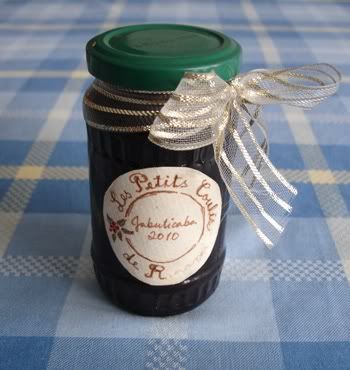
Hubby made a coulis of jaboticabas brought from Son² girlfriend's fazenda. This at the end of their season in November, but it has kept well in the fridge. Jaboticabas are a native fruit to our state, and the coulis has beautiful deep, dark reddish-violet color and a tart taste. It is especially beautiful over vanilla ice cream. Yumm!
 I washed and boiled some small jars and put some of the coulis in one.
Then I made a quick label. The writing, made with a thin-tipped marker and color pencils, blurred as I had glued the label onto the jar with the very cold coulis already in it—the condensation attacked!
The effect came out not too bad... I can pretend it's a certain vintageness from ageing in a cellar.
I managed to find a ribbon in mymess atelier, and so, a gift for our hosts, who much admire Hubby's cooking talents.
Amazingly, I actually managed to!
The last few days I've been enjoying the lighted tree, the Christmas votive candles... the smell of the evergreen in my living room. As I was so late in setting up, the joy of seeing these was even greater. I was even a little sad, but a happy sad... another Christmas come and gone. Enjoyed, now that the rush&tiredness are over and just memory.
I'm awaiting some more photos that Son¹ took and has to send me. I'll post them here when they do come in...
The New Year we spent with some friends at their farm in the southeast part of the state, about three hours' drive away. We had a lovely time: very food oriented! What to cook, who(s) to cook it, the cooking, then the eating!
All repeated the next day!
This interspersed with good conversation and napping. I actually had to asked forgiveness from my hostess... I was taking very long naps; I think I may even have gotten some of my sleep debt paid!
The new little house, a guest cottage with two suites,
that we inaugurated. It is set up the hill in the orchard.
The materials were reused from another little house
that had been on the property.
that we inaugurated. It is set up the hill in the orchard.
The materials were reused from another little house
that had been on the property.
Click to enlarge
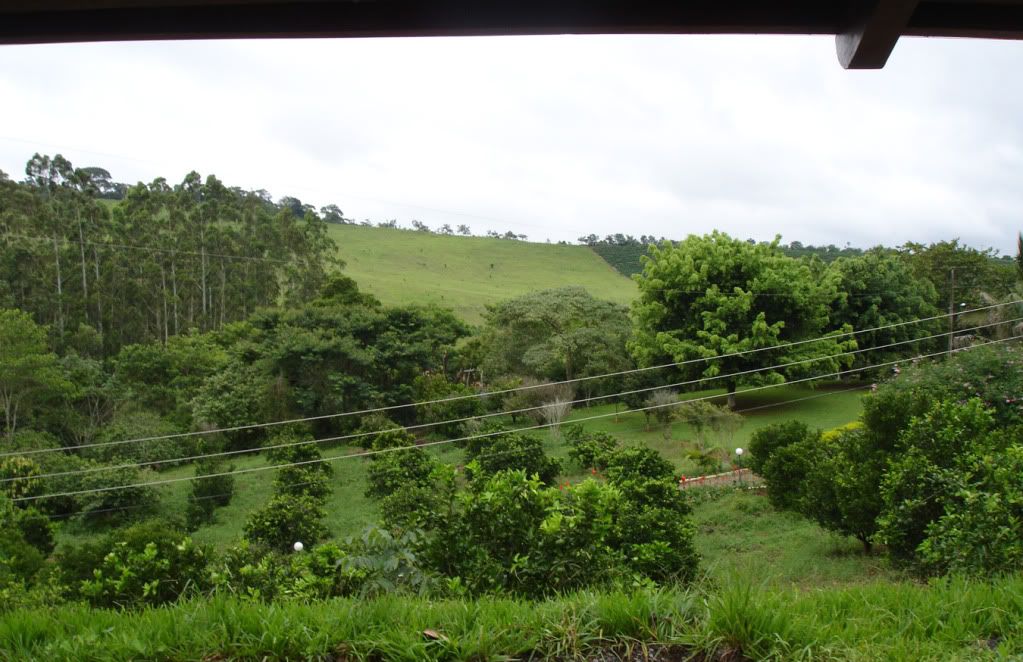
The view from the veranda of the guest cottage,
looking towards the valley.
The view from the veranda of the guest cottage,
looking towards the valley.
The red flowers' sisters that edge the drive can be seen.
The evening of January 1st we had...
Pizza!
A pizza fest in their home-pizzaria!
What a great way to start the new year!
What a great way to start the new year!
Sorry, what between sleepiness and pizza-hunger,
I didn't take pictures of the baked pizzas.
 |
| via |
Then I made a quick label. The writing, made with a thin-tipped marker and color pencils, blurred as I had glued the label onto the jar with the very cold coulis already in it—the condensation attacked!
The effect came out not too bad... I can pretend it's a certain vintageness from ageing in a cellar.
I managed to find a ribbon in my
Monday, January 03, 2011
Christmas 2010

This year (last year!) I have to admit that I wasn't in too much of a Christmas mood.
I usually love setting out the decorations... getting out my family of stuffed animals that join us in our Christmas cheer, my tree decorations made and that survived the years, and twinkly lights for the tree and veranda.
This year, although I got the boxes out at the beginning of December, I finally managed to put the wreath on the door (the official start of Christmas for me) only a week and a half before Christmas eve. The tree, although bought a full week ahead, I was only able to get ready on morning of the 24th...
I guess this is the "Just in Time" planning so much touted about in the business world!

Hubby desired a live tree for Christmas this year, so we found this lovely little conical expensive thuya. The decorations were more in a minamalist mode: your basic lights&balls.
I used the survivors of various years' white incandescent mini lights, and a new set of unearthly (as in "alien/from another galaxy') white LED mini lights Hubbs brought back from his December trip to Germany. Yes, I do not like white LED lights...
But mixed, alternated, with the leftovers of the regular mini lights, it actually came out interesting... but just by themselves, just think Christmas at the Frankenstein's or something else rather creepy!
I added the red and green butterflies that Son²'s girlfriend gifted us and a bow of iridescent cellophane I made years and years ago, and ... voilá!
Nearly instant Christmas tree!
I then added the few animals I did find (the box with most if them I couldn't find... ??? where or where has my little

Although not to an auspicious start—actually a rather bad one with sleepless nights the whole week before due to my cold&coughing and some others troubles—the Christmas gatherings came out very well:
Christmas Eve dinner here at home and Christmas Day dinner that we cook and take to my mother's. The food was all delicious, and more importantly, everyone was happy and in good spirits.
All peacefull under the Christmas star!
Hubbs also brought back from Germany a green tablecloth and some red embroidery sousplats. Once out of the package while setting the table, I found out to my dismay that it was a rather garish, very shiny satin. Added to the red sousplats, the table came out veeery colorful, more than my usual style. But, honors to my dear Hubby for thinking of a pretty home!

* Instant centerpiece: brass candlesticks plus apples plus red christmas balls *
I'll leave the Christmas dinner(s) menu(s) to another post.
Monday, December 13, 2010
"Papai, papai, deixa eu filmar!"
My eldest son got out the remains of the VHS tapes that we had filmed the children when very small and had them passed, whatever could be saved, to dvd's.
While watching a few of these with the aforementioned children, now in adulthood (fingers crossed!), we all started to laugh, as the soundtrack with its endless refrain, came through:
"Papai, papai, deixa eu filmar?! Papai, deixa eu filmar?! Papai, por favor, deixa eu filmar?!
Pai, eu sei filmar! Papai, deixa eu filmar?!"
>> (Daddy, Daddy, let me film? Daddy, let me film? Daddy, let me film?
Daddy, I know how to film! Daddy, please let me film?!")
Rather like this... though the pro-active part was only thought of, to be sure!
Just love Pierre Coffin's work...
And for more of the Lady in the Shoe theme: (see also That time coming around ... and Rose Hill Cottage)
While watching a few of these with the aforementioned children, now in adulthood (fingers crossed!), we all started to laugh, as the soundtrack with its endless refrain, came through:
"Papai, papai, deixa eu filmar?! Papai, deixa eu filmar?! Papai, por favor, deixa eu filmar?!
Pai, eu sei filmar! Papai, deixa eu filmar?!"
>> (Daddy, Daddy, let me film? Daddy, let me film? Daddy, let me film?
Daddy, I know how to film! Daddy, please let me film?!")
Rather like this... though the pro-active part was only thought of, to be sure!
Just love Pierre Coffin's work...
And for more of the Lady in the Shoe theme: (see also That time coming around ... and Rose Hill Cottage)
© Passion Pictures / MacGuff Line / P. Coffin
via The Pings Page
☼ The reason for which you wake up in the morning ☼
☼
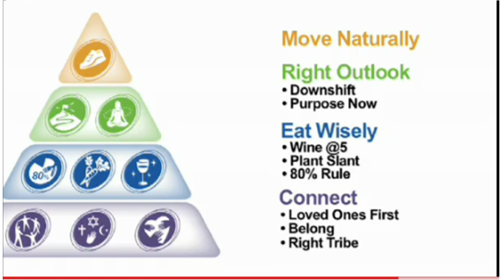
生き甲斐 Ikigai
In the Okinawa "blue zone":
"the reason for which you wake up in the morning"
Wednesday, December 08, 2010
Evolution of Man
Mock The Week - Outtakes
as Man: Frankie Boyle, Hugh Dennis, Greg Davies
egged on by Russell Howard
Friday, November 26, 2010
Miao!
Just saw this yesterday at my aunt's Facebook page.
Loved it!
Loved it!
The Duetto buffo di due gatti ("humorous duet for two cats")
by the Les Petits Chanteurs a la Croix de Bois,
Concert in Seoul, Korea, Nov 30, 1996
Concert in Seoul, Korea, Nov 30, 1996
From the Wikipedia:
Composition
While the piece is typically attributed to Gioachino Rossini, it was not actually written by him, but is instead a compilation written in 1825 that draws principally on his 1816 opera, Otello. The compiler was likely the English composer Robert Lucas de Pearsall, who for this purpose used the pseudonym "G. Berthold".[1]
Music and lyrics
The music consists, in order of appearance, of:
The lyrics are uncharacteristic, consisting entirely of the repeated word "miau" ("meow").
- the "Katte-Cavatine" by the Danish composer C.E.F. Weyse[2]
- part of the duet for Otello and Iago in Act 2 of Otello
- part of the cabaletta to the aria "Ah, come mai non senti", sung by Rodrigo in the same act
Thursday, November 25, 2010

Monday, November 22, 2010
The Majestic Plastic Bag & Jabberwocky
The Majestic Plastic Bag - narrated by Jeremy Irons
This got me thinking:
The Trash Bags That Wish They Could
These poor defenseless critters also suffer a great deal here, very often impeded from getting to the little known Unchartered Southern Atlantic Patch by dastardly dumps, risky rivers, treacherous trees and other perfidious plastic predators.
I do not know if they are homing in on that one or would rather head over to the Great North Atlantic Garbage Patch.
For more information on Plastic Paradise Patches, go to the 5Gyres site and blog.
Reading of gyres, these words of Jabberwocky comes to mind.
I can imagine the Plastic Bag gyring and gimbling in the wabes, chortling amongst its beamish polymerous companions.’Twas brillig, and the slithy toves
Did gyre and gimble in the wabe;
Whatever it may mean of my mental, er, faculties, this was the only poem I ever memorized from beginning to end.
So here, from Lewis Carrol to you... down memory lane...
Jabberwocky
’Twas brillig, and the slithy toves
Did gyre and gimble in the wabe;
All mimsy were the borogoves,
And the mome raths outgrabe.
“Beware the Jabberwock, my son!
The jaws that bite, the claws that catch!
Beware the Jubjub bird, and shun
The frumious Bandersnatch!”
He took his vorpal sword in hand:
Long time the manxome foe he sought—
So rested he by the Tumtum tree,
And stood awhile in thought.
And as in uffish thought he stood,
The Jabberwock, with eyes of flame,
Came whiffling through the tulgey wood,
And burbled as it came!
One, two! One, two! and through and through
The vorpal blade went snicker-snack!
He left it dead, and with its head
He went galumphing back.
“And hast thou slain the Jabberwock?
Come to my arms, my beamish boy!
O frabjous day! Callooh! Callay!”
He chortled in his joy.
’Twas brillig, and the slithy toves
Did gyre and gimble in the wabe;
All mimsy were the borogoves,
And the mome raths outgrabe.
Friday, November 19, 2010
Another Bright Blue Snuggie
Oh, this is funny!
 A few weeks ago on Nov 12, Son² came back from a week's business trip to the States bringing a gift for his dear old ma: a Snuggie.
At first, I thought it was just another blanket, a ve-e-ery bright blue, a blue that used to be called eletric for its visual shock potential; a blanket for warm tv watching.
But, eyes aglow, he insisted, , "Open it, open it!"
And, lo and behold:
A blanket with sleeves!!!

Ok, ok, this may not be world shaking news for all the blasé I-already-know-what-a-Snuggie-is folks, but is was a surprise to me!
I have since then, on the recent unseasonably cool evenings, been watching tv shnuggled in my son's sweetly thoughtful, very bright, electric-blue gift.
Taking a peek at The Pioneer Woman today, I suddenly see that there is another bright blue snuggie in the world!
Here you can read the funny&wow "A Gravel Road, Two Photographers, and a Bright Blue Snuggie", which was posted on the ... 12th Nov!
The very same day that my very own bright blue snuggie brightened and warmed my life!
At first, I thought it was just another blanket, a ve-e-ery bright blue, a blue that used to be called eletric for its visual shock potential; a blanket for warm tv watching.
But, eyes aglow, he insisted, , "Open it, open it!"
And, lo and behold:
A blanket with sleeves!!!
The Sleeve!
I have since then, on the recent unseasonably cool evenings, been watching tv shnuggled in my son's sweetly thoughtful, very bright, electric-blue gift.
Taking a peek at The Pioneer Woman today, I suddenly see that there is another bright blue snuggie in the world!
Here you can read the funny&wow "A Gravel Road, Two Photographers, and a Bright Blue Snuggie", which was posted on the ... 12th Nov!
The very same day that my very own bright blue snuggie brightened and warmed my life!
Fall
Living where I live, I do miss those defined seasons of my childhood in the Northeast & New England.
Here, we are now in spring, in which begins The Rainy Season and hot weather.
Or used to.
As worldwide, the weather here is now also rather freaky: some years almost no rain, some years much and floods. This year, the rains have actually come "on time" in October as in the olden days, but accompanied by unusual bursts of, for us, a very winterish cold. Brrrrr...
But I do miss the lovely light and colors of the Fall...
The photos below capture these well.
And get me thinking even more of Thanksgiving.
We don't have this holiday here, but everyday can be dedicated to giving thanks for all our blessings, our harvest of joys.
(click to enlarge)


 Photographs by Elizaberh Maxson
Here, we are now in spring, in which begins The Rainy Season and hot weather.
Or used to.
As worldwide, the weather here is now also rather freaky: some years almost no rain, some years much and floods. This year, the rains have actually come "on time" in October as in the olden days, but accompanied by unusual bursts of, for us, a very winterish cold. Brrrrr...
But I do miss the lovely light and colors of the Fall...
The photos below capture these well.
And get me thinking even more of Thanksgiving.
We don't have this holiday here, but everyday can be dedicated to giving thanks for all our blessings, our harvest of joys.
(click to enlarge)


To see more beautiful photos,and thoughtful post, go to her
The Adventures of Elizabeth
The Adventures of Elizabeth
Monday, November 08, 2010
Venus Rising
"Now it is time for Venus to emerge from the light of the Sun, any day now, as the heliacal rising planet. Keep your eye on the pre-dawn sky, as many star priests and priestesses have done through millennia. This is just about the strongest position any planet or star can take, announcing the day."

"The Lady of the Morning is radiant on the horizon.
Honored Counselor, Ornament of Heaven…
When sweet sleep has ended in the bedchamber,
You appear like bright daylight.
You render a cruel judgment against the evildoer;
You destroy the wicked.
You look with kindly eyes on the straightforward;
You give that one your blessing."


— M. Kelley Hunter
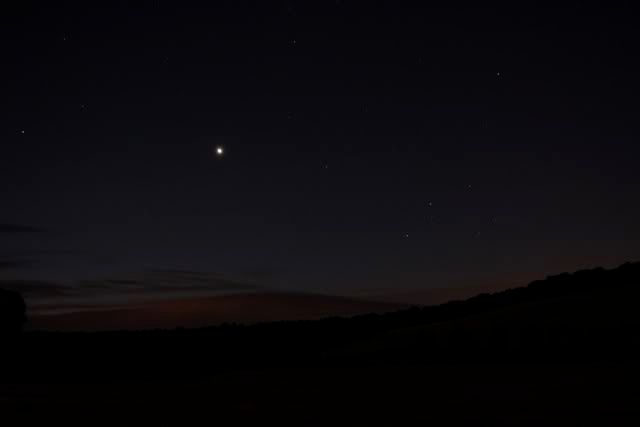
Venus [rising], Orion and Sirius by Tristan Gooley @ The Natural Navigator
"The Lady of the Morning is radiant on the horizon.
Honored Counselor, Ornament of Heaven…
When sweet sleep has ended in the bedchamber,
You appear like bright daylight.
You render a cruel judgment against the evildoer;
You destroy the wicked.
You look with kindly eyes on the straightforward;
You give that one your blessing."
— from a hymn to Inanna, as given in Inanna, Queen of Heaven and Earth
by Wolkstein and Kramer, via Cosmic News by M. Kelley Hunter
The Birth of Venus by Sandro Botticelli
(look at all those wonderful, beautiful pudges!
forget the Twiggies, Bunchens, et al... Botticelli is the word!)
(look at all those wonderful, beautiful pudges!
forget the Twiggies, Bunchens, et al... Botticelli is the word!)

APOD - Astronomy Picture of the Day
Venus and the Moon at dawn, Nov 5, 2010
Sunday, October 31, 2010
Halloween

Today's Halloween. Here Halloween is Witchs' Day, Dia das Bruxas.
And election day.
Nuff said of that!


And election day.
Nuff said of that!
On a lighter note, the following are Halloween images I have gathered
from the web over the years.
I don't have the credits for them. If anyone knows, I'll be most happy
to give the authors their due.
Warning: CUTE ALERT!!!
from the web over the years.
I don't have the credits for them. If anyone knows, I'll be most happy
to give the authors their due.
Warning: CUTE ALERT!!!
It's The Great Pumpkin!
A HAPPY and SAFE HALLOWEEN!
Subscribe to:
Posts (Atom)


